We use cookies to improve your online experience. By continuing browsing this website, we assume you agree our use of cookies.
Home > News & IEM Guides > Care & Troubleshooting > Wired IEMs Got Wet - What to Do Before Using Them Again
Sep.2026 27

Wired IEMs Got Wet - What to Do Before Using Them Again

Introduction
Learn what to do when wired IEMs get damp or wet, what drying shortcuts to avoid and when to contact support before testing.
Details

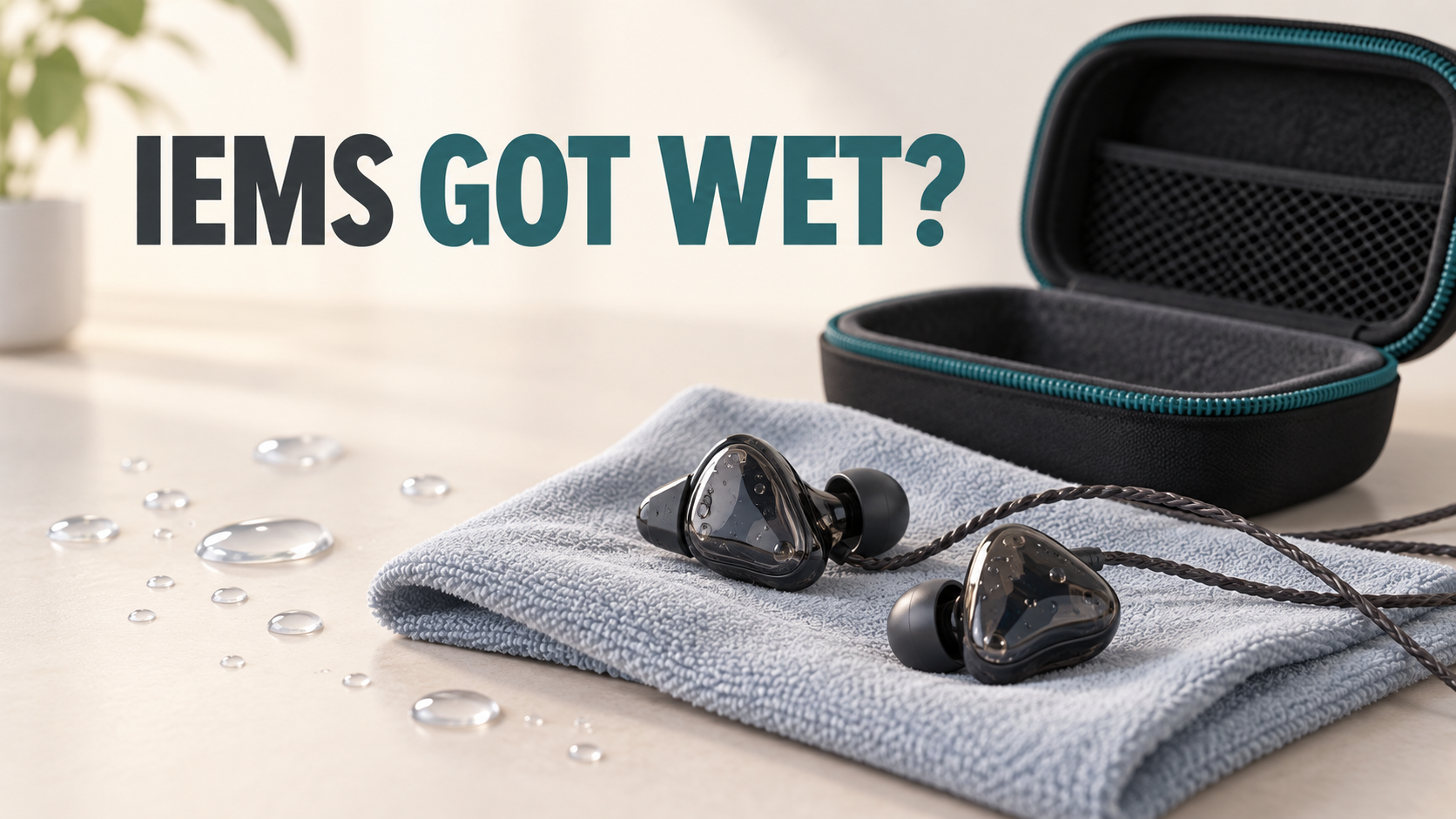
Illustration of disconnected damp IEMs resting on a dry cloth

If wired IEMs get wet, disconnect them from the source and stop playback. Do not keep testing to see whether the sound has recovered. Water on the outside and liquid inside the shell are different situations, and a dry exterior does not prove the inside is dry.

Start with gentle external drying

  1. Unplug the earphones and any connected dongle. If an electronic adapter also got wet, follow its separate care instructions.
  2. Remove the ear tips gently and dry the outside with a clean, soft cloth.
  3. Keep the earphones in a dry, ventilated place at room temperature. Avoid trapping damp earphones inside a closed case.
  4. Keep the tips separate until they are fully dry and follow the tip maker's care instructions.
  5. Contact support if the earphones were submerged, exposed to salt water or a sugary drink, or show visible liquid inside.

Do not rush drying with heat or pressure

A hair dryer, heater or oven is not a controlled repair method for earphones. Do not blow compressed air into the nozzle, suck on the filter or push absorbent material through the mesh. Avoid loose powders or grains around openings; they can introduce more debris.

There is no universal number of hours that guarantees every earphone is safe to use after liquid exposure. The liquid, amount, entry path and model construction all matter. A time stated in another manufacturer's manual is not a drying specification for your TINHIFI model.

Does a metal shell mean waterproof?

No. Shell material does not establish water resistance. Check whether the exact model has a published rating and what that rating covers. Do not assume wired audiophile IEMs are suitable for swimming, showers or heavy exercise because the cable is detachable.

Sound is quieter after moisture exposure

Moisture may affect a filter or another part of the system, but listening alone cannot identify the damaged component. Do not remove the filter or play loud “water eject” sounds as a repair. If sound remains changed after the product has been handled according to support guidance, request inspection.

Prevent repeated damp storage

After normal use, wipe the exterior and let surface moisture dissipate before closing the case. Keep the case itself clean and dry. Avoid storing earphones next to a wet towel or in a hot, humid bag. These habits help with storage, but they do not make an unrated product water-resistant.

Send TINHIFI support the model, liquid involved, duration of exposure and any change in sound. Check the warranty terms rather than assuming liquid damage is covered.

Reference: Sennheiser's care guidance supports gentle external drying and keeping liquid away from electronics; its product-specific instructions and timing are not TINHIFI specifications.

Illustration: generated editorial artwork, not a photograph of a specific TINHIFI model.

X