We use cookies to improve your online experience. By continuing browsing this website, we assume you agree our use of cookies.
Home > News & IEM Guides > IEM Guides > How to Choose IEM Ear Tips: Size, Fit, Silicone vs Foam
Sep.2026 27

How to Choose IEM Ear Tips: Size, Fit, Silicone vs Foam

Introduction
Weak bass or an uncomfortable fit? Learn how to check your IEM ear tip seal, compare silicone and foam, and choose the right size for each ear.
Details

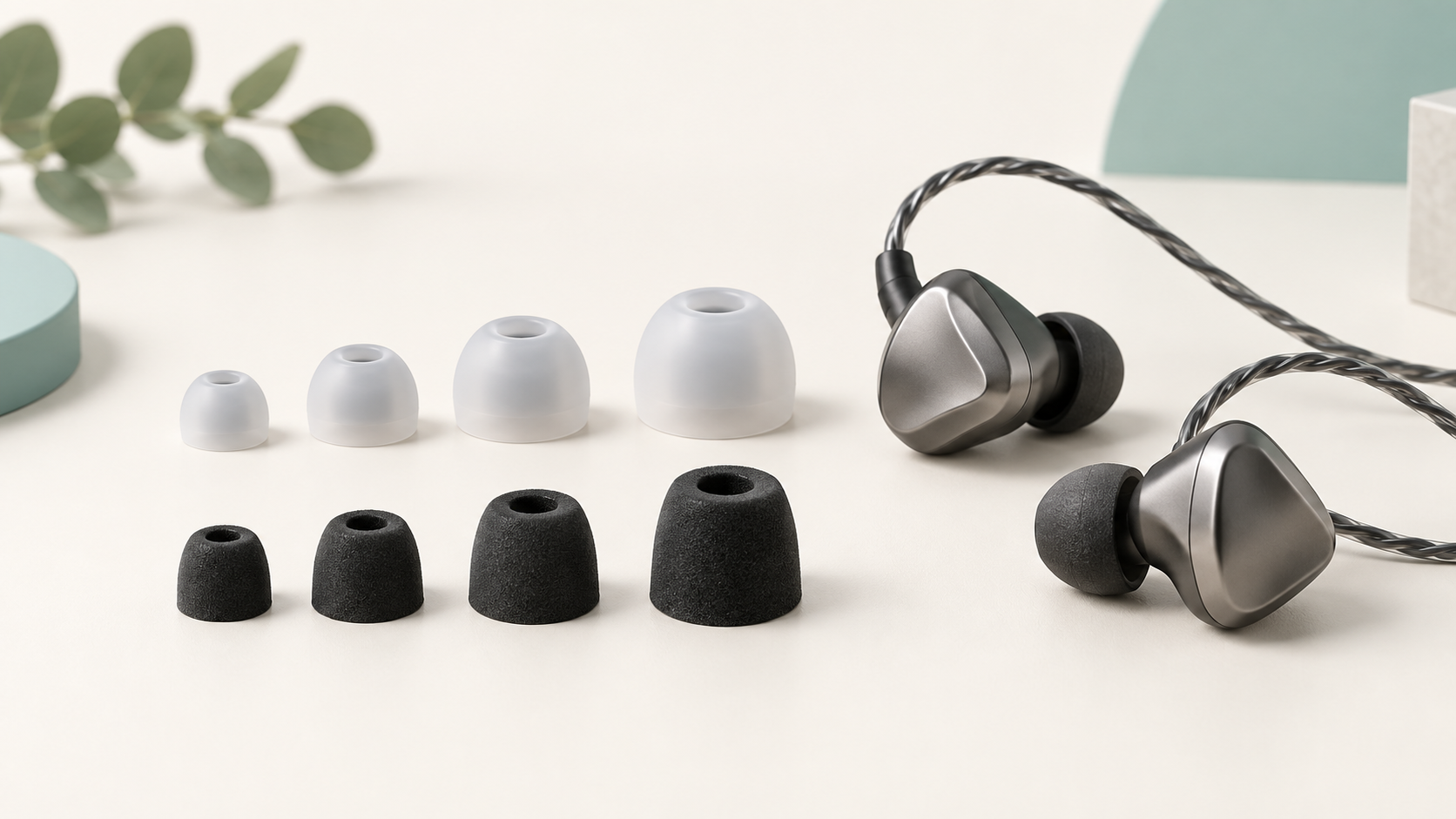
Illustration comparing silicone and foam ear tips in different sizes beside an IEM

A poor ear tip seal can make an otherwise suitable IEM sound thin or feel unstable. Before replacing your earphones, check the tips. The right pair should stay secure, feel comfortable and keep the sound consistent when you move your jaw.

Start with fit, not a promised sound upgrade

Ear tips form the contact between the IEM nozzle and your ear canal. Their shape, size and material affect the seal. A leaking seal can reduce perceived bass, while an oversized tip can create pressure or make the earphone sit awkwardly. Bigger is not automatically better.

Use the supplied medium tips as a starting point, then compare one size smaller and larger at the same low listening level. Your left and right ears may need different sizes. Stop if insertion causes pain; do not force a deeper fit.

A simple ear tip fit check

  1. Check that each tip is firmly attached to the nozzle and does not slide off easily.
  2. Insert the IEM gently, following its wearing instructions. Route an over-ear cable comfortably rather than pulling it tight.
  3. Play a familiar track quietly. Listen for stable bass and a balanced left and right image.
  4. Move your jaw and turn your head. If the sound changes sharply or the tip slips, try another size or shape.
  5. Wear the pair for a short session. A secure seal should not require constant pressure from your fingers.

Silicone vs foam ear tips

Silicone tips are convenient for repeated insertion and are available in many shapes and sizes. They can be a useful starting point for everyday use. Cleaning instructions still depend on the specific tip.

Foam tips compress and then expand to fit the ear. They may suit listeners who struggle to keep a seal with silicone, but they require time to expand and can wear out with use. Follow the maker's instructions; do not assume foam can be washed like silicone.

Neither material guarantees better sound. Compare comfort and seal first, using the same track and volume. A tip that is popular with someone else may not fit your ears or your IEM nozzle.

Check nozzle compatibility before buying

Look for the tip maker's supported nozzle sizes or model list. The inner opening must grip securely without damaging the tip or covering the sound outlet. A loose tip can come off during removal. Do not buy solely because a listing says “universal,” and do not modify the nozzle to make a tip fit.

Common questions

Why do my IEMs have weak bass?

A poor seal is one possible cause. Refit the tips and compare sizes before changing EQ or buying another pair. If the problem remains, check the source settings and the earphone's sound outlet.

Should both ears use the same tip size?

Not necessarily. Choose the size that fits each ear comfortably and securely.

Do wider-bore tips always sound brighter?

There is no reliable universal rule for every earphone and listener. Bore shape, insertion and seal interact. Treat broad claims as a starting point for comparison, not a guaranteed result.

Build a setup that fits you

Explore TINHIFI earphones and accessories after checking your fit requirements. Keep a note of the tip size and shape that work for each ear so your next purchase is easier.

Cover: generated editorial illustration, not a photograph of a specific TINHIFI model.

Further reading: Campfire Audio's ear tip and seal guide; Sony's guidance on caring for foam earbud tips. Product-specific instructions take priority.

Keep your fit consistent with our IEM cleaning and ear tip care guide.

X